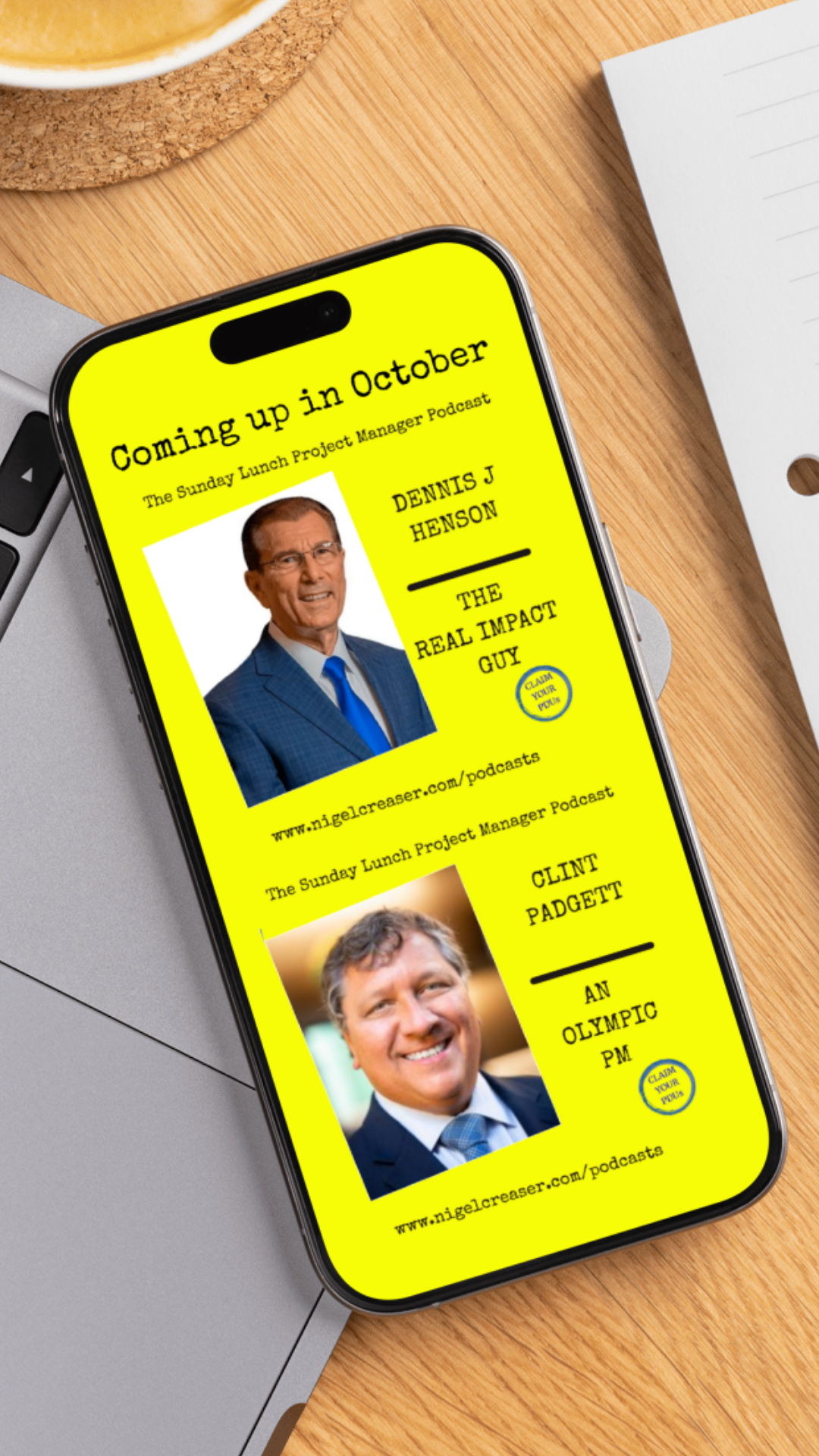
This month’s amazing guests are:
Greg Bennick is a world-class speaker, social theorist, and best-selling author whose ideas have inspired tens of thousands of people to take new approaches to eliminating distraction, increasing productivity and focus, and aiming towards personal development.
His book “Reclaim the Moment: 7 Strategies to Build a Better Now,” (affiliate link here: https://amzn.to/44eoeOs or on Audible https://amzn.to/460Dznb) takes a close look at eliminating distractions so that we can be more productive, be better skilled as leaders, and increase our focus. He engages with audiences in conversations that span borders, appearing on stages in 27 countries (and counting). (transcript)
Scott Morris is the founder and CEO of PropulsionAI. After two decades leading HR for organizations across five industries and two continents, and sizes ranging from startups to enterprise scale companies (15,000+ employees), Scott’s now traded his cushy C-suite career for a tech bro vest and the thrill of entrepreneurship. PropulsionAI’s platform helps companies rethink role design & how those roles connect to business outcomes. It creates strategic job descriptions in minutes that focus on outcomes instead of tasks. This leads to better candidates, higher engagement, increased productivity, and lower turnover. The platform creates capacity for thinly stretched HR teams by engaging managers directly. While many companies struggle with headcount optimization and talent retention, PropulsionAI is helping leaders at Albertsons, Wisk Aerospace, and the City of Denver make smarter hiring decisions, and improve performance management. (transcript)

Have a listen / watch their interviews here:
Greg
YouTube: https://youtu.be/zhCuIyndAEY
Scott
YouTube: https://youtu.be/3DkgtyJ_9CE
Scott Morris’s Website LinkedIn
Support the show.
If you’d like to support the show, you can now buy me a coffee, beer, or whatever you’d like. Click here: https://www.buymeacoffee.com/sundaylunchpm
You should soon be able to grab a copy of my books and my guests’ books here soon https://www.nigelcreaser.com/shop or shop on Amazon at https://www.nigelcreser.com/amazonshop
Affiliates
Online PM Courses: https://www.nigelcreaser.com/onlinepmcourses
Greg’s Transcript
Nige (00:01)
Today I am delighted to welcome Greg Benwick to the show. ⁓ Greg knows about focus. ⁓ Through reading about his life, you wouldn’t know that though. ⁓ He’s a bestselling author, a keynote thought leader, a noted rare coin researcher, a TEDx speaker and speaking coach, a humanitarian philanthropist and an influencer devoted to transforming the world by inspiring personal and social change. And for the last three decades, he’s traveled the world
Nige (00:31)
listening to people and what they want and need. ⁓ He’s come to realize that ⁓ people want to matter. ⁓ They want to feel that they matter. They want to be part of something meaningful. ⁓ And ⁓ that’s how he ups organizations and ⁓ individuals ⁓ get that and get that feeling of mattering. Greg, thank you for coming to the show. ⁓
Greg Bennick (00:54)
Thank you so much. It’s funny, the audio I think is ⁓ either you said humanitarian or it came across as humanitarian, not humanitarian. But I kind of like that idea. ⁓ I like the idea of being a humanitarian and ⁓ approaching life with humility. Although a humanitarian and doing work in Haiti is kind of more officially it. Humilitarian, I think we’ve created a new word here and I kind of like that. How do we approach our life and our work with a bit of humility, lack of ego amidst a world where people are driven by ego? ⁓
Nige (01:00)
to move forward. ⁓
Nige (01:04)
and I think we’re going to to wait and
Nige (01:14)
The next period I don’t think we’re to much of.
Greg Bennick (01:24)
to go with that. Humilitarian. I like it.
Nige (01:26)
Yeah, just trying to find typos in all of my speech. they… We’ll get a book written, get out there quick. So Greg, tell us a little bit more. I was a little bit of detail and you just mentioned Haiti there as well. Just tell us a little bit about you.
Greg Bennick (01:31)
Good, we coined a new term here. You’ve heard it here first, people. Humilitarian, approach the world with humility. Thanks and good night. This is great.
Greg Bennick (01:42)
Absolutely, let’s go.
Nige (01:53)
⁓ Bit of your background, family maybe, where you grew up, where you’re from, that sort of stuff. ⁓
Greg Bennick (01:55)
Sure, sure, sure, sure. So I grew up in an interesting family where my parents, ⁓ my mom switched jobs every 10 years on purpose because she wanted to always challenge herself ⁓ to ⁓ live new experiences. So she switched her job every 10 years. ⁓ My dad, after working in ⁓ the corporate world for years, decided he wanted to work for himself. ⁓ Well, that was pretty fascinating because it led to a situation ⁓ where
Nige (02:03)
I just wanted to let you know that I’m trying to do a lot of things in my experience. So thank you for having me.
Nige (02:18)
There’s just so much that has to be done for us to be able do something. That was pretty fascinating. Because all those things are in the room. It’s obviously in the Why do you get up there? Or, let’s say, challenging themselves to do something different and do something different. So when I was coming up and I got involved with the performance of this community group, doing the work, since I was 13 or 14, I decided, I’m ready. I’m just going to it. I’m so
Greg Bennick (02:23)
⁓ I was influenced by people who were constantly ⁓ challenging themselves to do something different and do something better. ⁓ So when I was coming up and I got involved with performing and speaking and connecting with audiences as a 13-year-old, ⁓ I decided, you know what, I want to live a life that is engaged as much as possible and varied as much as possible. So ⁓ my ⁓ bio makes me sound like a jack of all trades, master of none.
Greg Bennick (02:50)
but what I’ve tried to do is become a jack of all trades master of as many as I can, which is all consuming. ⁓ That means, of course, I don’t have kids because I couldn’t have time for them, right? ⁓ But ⁓ I’ve done a number of things. So I started out actually as a juggler when I was 13 years old ⁓ and immediately realized that I could impact audiences in the corporate realm and associations and whatnot by juggling and tying in customized ideas to what they were interested in.
Nige (03:10)
Thank ⁓
Greg Bennick (03:19)
and entertaining people with messaging. So that was cool. I started doing that when I was 13, 14, 15 years old. ⁓ And then over the course of my life, as some of the things you’ve talked about in the bio have been true, I am indeed a rare coin researcher and writer. I write for four different ⁓ publications about rare coins. ⁓ The Haiti tie-in is that I have a nonprofit that does development work in Haiti. I work for Haitian people on ⁓ building houses, providing clean water systems, and helping farmers plant crops.
Nige (03:20)
Professor Lipson.
Nige (03:35)
Thank you.
Greg Bennick (03:48)
There’s a number of different things which have come up over the years, but I make my primary living as a keynote speaker and coach and trainer in the corporate and association market around the idea of creating space for possibility through improving our focus and basically where we put our energy.
Nige (04:05)
That’s brilliant. ⁓ So obviously, I started talking earlier, ⁓ before we’d start recording, while we sorted out the sound. ⁓ And I ⁓ mentioned that ⁓ the thing that sort of sparked my interest in reading your bio, ⁓ when we connected, was around ⁓ that ⁓ element of focus. And ⁓ fucking little plug for myself, my little book that I battered out at. My first chapter in this book,
Nige (04:35)
⁓ is called notifications after the introduction is called notifications. And it begins with, I’ve got one simple piece of advice when it comes to notifications, ⁓ turn the bloody things off. ⁓ you can see where focus ⁓ and how to ⁓ make room for focus for us ⁓ is something that is ⁓ of interest to me. ⁓ Now,
Nige (05:02)
⁓ in improving my productivity in London for years now my my mobile phone it’s it’s it’s an answer machine rather than a tool that tells me stuff ⁓ it doesn’t I turned off all the clicks and beeps and bops ⁓ Microsoft Outlook all the first thing I do when I get a new installation of that is turn off all the notifications except for meetings because those are needed but all the other stuff that just makes me go ⁓ my boss sent me an email ⁓ I wonder what that’s about
Nige (05:30)
And then I go and look at it and it says, ⁓ has anyone taken the teaspoons from the kitchen? ⁓ It’s something it’s something that important. ⁓ And those are the sort of things that the ⁓ I know just eek at our productivity as ⁓ in work ⁓ and in life and at home and all those sort of things. So that’s ⁓ immediately you, your ⁓ focus drew me to that. So I really like to talk about you’ve also got your book, it reclaimed the moment that book. What made you
Nige (06:00)
sort of like get into this particular part of productivity because it’s multifaceted, isn’t it? ⁓
Greg Bennick (06:07)
Sure, sure, sure, sure. So the book, as it were, Reclaim the Moment, ⁓ Seven Strategies to Build a Better Now, also talks ⁓ about ⁓ the idea of distraction, certainly, and the way you’ve described it, the way that, my boss texts it, this happened, this happened, we’re thrown all over the place. ⁓ I realized that I was being thrown all over the place as well, and I was in a conversation with a friend of mine who’s a futurist. ⁓ We were on Zoom.
Nige (06:16)
Thank ⁓
Greg Bennick (06:32)
We were talking about the future and the future of work, the future of cities. ⁓ And at one point I sort of exasperatedly said, I don’t want to be a futurist. I just want to build a better now. This is probably four years ago or so. I just want to build a better now. And the second I said it, we both went, wow, that’s really good. And that became my tagline. If you want to build a better future, build a better now.
Nige (06:53)
Thank you.
Nige (06:57)
Yeah.
Greg Bennick (06:59)
and I put it on my website and started exploring the idea more and realized this is what I’ve been talking about for years just in different forms not with that specific ⁓ intention. So the book actually came about in an unusual way. A friend of mine who I’d met years before got a job at Wiley who are a major publisher and reached out to me having seen that tagline now on my website and said, hey,
Nige (07:09)
You catch that? So, I’m going catch you. So, send them off.
Nige (07:20)
sure how many of you have heard of it. It’s not a shiny one. It’s a little bit like a puzzle rock. It’s bit a of paper.
Greg Bennick (07:24)
I saw this tagline on your website. Do you want to submit a book proposal around this build a better now idea? I thought she was kidding at first, but she was completely serious. So this book was the result of me having a friend who worked at a publisher who thought it would be a good book title and the publisher agreed. It was never like I wanted to write a book and I worked so hard to get it published. I actually just thought of ideas that came to me organically and then somebody published them. It’s a…
Greg Bennick (07:52)
It’s a miracle basically is what it is. ⁓ So it came to me in a very unusual way. I go to a lot of speaking conventions where people walk around and they try to ask each other, know, how did you get your book published? How did you get a book contract? That sort of thing. ⁓ And I explained to them, you know, I met my friend because I was at her house six years ago ⁓ and we were waiting to go out to dinner and all of her kids were running around her house and I started teaching her kids how to juggle to pass the time.
Nige (07:54)
You’re still in a difficult time, I think.
Nige (08:07)
Thank
Greg Bennick (08:20)
and she asked me about myself and I explained, oh, I’m interested in writing. The point is when people ask me, how do you get a book contract? I say, well, you teach some kids how to juggle and then you wait six years and then a major publisher offers you a book contract. That’s how it works. It’s simple, try it. That happens all the time. That’s exactly how this book came to be. And I could sit here and feed you a line and say, I’m so brilliant that my ideas couldn’t be ignored by the publishing world.
Nige (08:22)
It’s happens all the it?
Greg Bennick (08:48)
No, it’s actually that I taught some kids how to juggle and then the right person at the right time paid attention to the right idea and here we are.
Nige (08:52)
time pay attention to the right actor. That’s brilliant. There’s, I heard a story on a writing podcast, interestingly enough, was they were interviewing a guy who’s, I can’t remember the name of the film, I always forget it. wasn’t great, film, but the book that was written was the guy who wrote it, they were interviewing him and he just got this major film, Mark Wahlberg in it, you know what mean? It was decent. It went really well for him. was a novel.
Nige (09:19)
But one of things he’s done is put in the back of it or the front of it, basically saying, ⁓ if this book gets given to a Hollywood producer and someone produces the film, if you can prove to me you’re the person who did it, we’ll give you 50 up to whatever, thousand pounds or something. So please, if you know someone, please hand it. ⁓ And it was apparently, I can’t remember, it was somewhere in Asia or in the Indian subcontinent that…
Greg Bennick (09:36)
Yeah, sure, sure, sure.
Nige (09:46)
someone was in a hotel there where someone had had this book and it had been left ⁓ and someone had picked it up ⁓ in that that read it and read that bit and then and they were ⁓ a person who was involved in ⁓ show creation and things like that and it’s kind of like a lot of serendipity to get there and that’s a lot of things are like that aren’t they? ⁓
Greg Bennick (10:04)
Well, you know what I think? You’ve given me a good idea. So I have a number of copies of my book and I travel a lot. I think I’m gonna start leaving them not in airport or not in hotel rooms or in airports, but in bookstores. I think I’m gonna start putting my book ⁓ literally in bookstores. If I don’t see it in an airport bookstore, I think I might just put it on the shelf and see who grabs it and tries to buy it. Or I might leave it somewhere. I like that idea. That serendipity creating idea. That’s pretty cool.
Nige (10:32)
Yeah, yeah, it was it was when I heard that and it was it was just they took a punt on it for a laugh really and they never thought anything would come in it. ⁓ And it did and that’s a really good idea. And it ⁓ was what I think was was the part of the premise of staff and this book to other people if you enjoy it handed to other people as well or let someone else have it. So again, rather than kind of the opposite to a lot of publishing industry where it would be like it says you can’t loan lend or gift this book.
Greg Bennick (10:38)
Yeah.
Nige (10:59)
without written permission from someone’s grandma’s grandma’s grandma or something like that. So, so obviously, you that book idea came there, the Builder Better Now, what was it that kind of led you from juggling and helping people and doing that and kind of leading to this sort of corporate career that you’ve got? And then your, your, your speaking and all that sort of stuff? What was it that moved you that way into into that?
Greg Bennick (11:29)
Yeah, well, you
Nige (11:29)
Because I imagine doing some of the juggling teaching juggling, I’ve seen these sort of things in corporate events, but it was kind of, it sounds like you took you taken it more than just a little bit of entertainment, it’s taken it more forward as an analogy.
Greg Bennick (11:41)
Yeah, for sure. this, yeah, a step further for sure. Well, it started when I was a kid, when I was about 15 years old. I’m gonna tell a fun story that’s a backstory bit, and then we’ll get into the answer to your question. But I’m 15 years old. I’m walking around a party, a company party, in the town where I grew up, in the northeastern part of the United States. And it was a party for a company called Remington. Remington was a shaver company.
Nige (11:52)
people who had money in their hands. But I’m not a taxi driver. I’m walking around and I’m partying. The company is partying in the town in the city New And it was partying for a company called Red Angel. So I’m going to go check it out.
Greg Bennick (12:08)
They were owned at the time by a guy named Victor Kayam. And Kayam, you remember him? Yep. Okay. So his advertisements, he was on the advertisements. He would hold up a razor, like I’m holding up this pen, and he would say, Remington, I like this shaver so much, I bought the company. Okay. Kayam was a monster of a guy in terms of his immense scope of his business. know, he was a hugely successful businessman. He went on to own the New England Patriots football team. And the point is,
Nige (12:11)
⁓ I remember Victor’s adverts. ⁓ Yeah. ⁓
Nige (12:31)
coming to you this piece of news. Now, you’ve got a few days to this news. It’s been a while since I’ve been here. It’s been a long time. You’ve back at the place. 15 years old. I’ve been walking around this mansion. I joined the three us. I’ve done a lot of time at graduate school. All of this time I’ve been quite fortunate. And it’s not like it’s not a little strong. It’s not a little over the shoulder. It takes a lot of It’s lot effort. I just feel around me. I like I’m in a place where man.
Greg Bennick (12:38)
I’m 15 years old. I’m walking around this event. ⁓ I’m juggling three juggling balls at a Remington event. All of a sudden, a hush falls over the crowd. And it’s not because I’m the best juggler in the world. ⁓ But I look over my shoulder. Victor Kayam has walked into the event, at the Remington event. And he’s surrounded by these bodyguards and handlers. He walks up to me, I’m juggling, and he says, hey juggler, let me see those juggling balls. I hand him the juggling balls.
Greg Bennick (13:08)
He takes the juggling balls and he does this rudimentary juggle and all of his bodyguards go, ⁓ and everyone in the audience claps. He hands the juggling balls back to me and he says, hey, those are really nice juggling balls. I take the three juggling balls, I hold them up next to me and I say, why, thank you. I like these juggling balls so much, I bought the company. Okay. ⁓ No one laughed and then Victor Kiam laughed and then everyone laughed.
Nige (13:22)
Like the change up.
Nige (13:29)
⁓ And then Victor ⁓ and then everyone. ⁓
Greg Bennick (13:36)
And it was a moment where I said, ⁓ I see. If I tie the juggling in to things that are meaningful to people, that’s a really strong way to connect, right? Because everyone then after that was all about the juggler. They thought I was the greatest thing in the world. OK, fast forward 30 years. So here we are. And when I’m on stage with Build a Better Now, the reason that I love the idea and the reason that it resonates is because I’m always tying it in ⁓ to entertainment and
Nige (13:51)
and you’re not going to have to it again. So you are not going to have it again.
Greg Bennick (14:03)
trying to tie it into the group that I’m with, just like I did when I was a kid with Victor Cayam. ⁓ So I’m there on stage, maybe I’m talking about taking risks because it’s important for this company to use innovation and their people are learning about innovation. And instead of just talking about taking risks, I start juggling a machete. Well, you’re going to gather the attention of the audience if you’re juggling a knife and talking about taking risks. So tying those things together is something that I learned when I was a kid. And that’s why I take that.
Nige (14:19)
I’ll take the rest of this like 30 seconds.
Nige (14:27)
⁓ It’s not it.
Greg Bennick (14:32)
you know, to the next level with the juggling, the ideas, the entertainment, the customization, all of it, all of it serves its purpose of communicating more effectively.
Nige (14:33)
Thank
Nige (14:41)
⁓ that’s, ⁓ yeah, I think that’s making me think with the juggling and machete. I might try and do that next time I have a risk review, ⁓ just with my project team to see if, yeah, see what would happen there. I’m not very good at juggling, so.
Greg Bennick (14:50)
Do it. Absolutely. Yeah, I mean, I highly recommend bringing a machete into your ⁓ your risk review. ⁓
Nige (15:00)
Yeah, it would be quite interesting. ⁓ I’m not sure if that ⁓ passed the year within my organization, whether it would ⁓ work. I get the point. Yeah, it’s it’s ⁓ it’s bringing stuff to life, isn’t it? And ⁓ there’s an emotional connection to those sort of things that then ⁓ in whether it’s positive, negative embeds and a memory ⁓ and embeds that learning much better than as you know, think you’ve
Nige (15:29)
I’ve read on your website there saying, was it just a PowerPoint slide? ⁓ Talking about risks and stuff. And it’s kind of like, yeah, it’s a bit dull. It’s not like in in thoroughly. Most people are sleeping through that. Whereas if you can give that little bit of ⁓ Yeah, that just connecting to something else. yeah, that teamwork type things and things are we were doing ⁓ a thing about teamwork where they had a choir. So they’re
Nige (15:57)
a team and they turned us into a choir, but used it as about ⁓ the variations and how to build it up and build up as a team and stuff and it was good, really enjoyable, really entertaining. ⁓ None of us can sing particularly well. ⁓ But ⁓ we as a group, ⁓ we created a really nice sound ⁓ altogether. And that’s that I think that’s kind of where that learning was was to able to bring that forward. ⁓ we did. ⁓
Greg Bennick (16:21)
Nice.
Nige (16:22)
When you talk about focus, when you talk about reclaiming, ⁓ reclaiming the moment, and building a better now, ⁓ what are the things that you ⁓ from what you’ve seen and what you’ve done? What are the things that people or organizations, because I think there’s a, ⁓ there’s an organizational ⁓ thought about this as well. What say talk about as the individual say, my listeners around how ⁓ building a better now reclaiming that moment can help them. Why bother sort of thing.
Greg Bennick (16:52)
Yeah, no, that’s a great question. So I’m going to answer in terms of the chapters of the book, ⁓ not because I’m pitching the book, but because that’s really where the ideas are codified. But we live in a world of constant distractions. We all know that. We live in a world where we give away our attention and our energy freely. Well, that’s an immense problem because it limits our possibility. When I’m so focused on the bings and the bops, as you said, of my phone, or I’m so focused on what everybody else is doing, I’m limiting my own potential. I’m limiting my own ability to connect with other people. ⁓
Nige (16:52)
Yeah, another great question for ⁓ Andrew. ⁓
Nige (17:04)
I’m
Greg Bennick (17:21)
You know, the world and the media often convince us that the world is challenging and impossible and hard to navigate. And unless we put our attention in the powers that be, we’re never going to be able to ⁓ do what we need to do to get through. Well, I believe a little bit more in people taking responsibility for themselves. So the book titles, the book chapter titles come into play here. ⁓ The first chapter of the book is believe in the possibility of kindness to escape the trap of pessimism.
Greg Bennick (17:50)
That’s a way to create possibility. If I walk into this interaction with you and I think to myself, this guy is gonna be intense with me, he’s not gonna ask good questions, this interview probably won’t go well, I don’t think I should be on, what am I doing here? I’ve just limited the potential of our conversation, I’ve limited the potential of everything that could come with it. But if I believe in the possibility that you’re a kind-hearted soul and that I am, and that we’re gonna have a good conversation, all of a sudden, the pessimism is erased and we create space for possibility here.
Nige (18:05)
you
Nige (18:15)
⁓ So, thank you. ⁓
Greg Bennick (18:19)
The second chapter, keep your eyes on the knife, is a juggling metaphor. If you’re juggling two beanbags and a knife, where are you gonna keep your focus? I hope it’s gonna be on the knife, right? So with that in mind, ⁓ what’s your knife? What’s the thing that is mission critical for you to keep your focus and attention on? That way when the world encroaches on you, you don’t give away your attention to that because you know where your attention’s supposed to be. ⁓ So things like that.
Nige (18:25)
So.
Nige (18:28)
Yeah. ⁓
Greg Bennick (18:45)
help us reclaim this moment so that we can step into the possibilities that we want. ⁓ You know, there’s a chapter called leap into the dark and the tagline is to embrace the possibility of success. You know, we fear failure all the time, but I think that in my life, I often fear success. ⁓ What happens if I get everything I want? Then I don’t get to be as relaxed anymore. I have to engage with that new level I’ve achieved. ⁓ So leap into the dark. It’s an invitation to give it a shot.
Nige (18:55)
to the way that it’s done. So, you know, we feel feel for them.
Nige (19:11)
Thanks. ⁓
Greg Bennick (19:14)
leap into the dark and embrace the possibility of success and see what happens when ⁓ we give something a try that otherwise we would have limited ourselves about. So all of those chapters, ⁓ or those chapter titles as you can imagine, bring people to a point where this moment is better. I mean, this is just a better moment because I believe in the possibility of kindness. I’m leaping into the dark saying, let’s do this. I’ve got my eyes on the knife. I’m not thinking to myself, okay, what’s this pen gonna offer me today? I’m focused on you.
Greg Bennick (19:44)
You know, we do that and reclaim this moment from the distractions of the world, we absolutely build a better now and that lets us create the future that we want.
Nige (19:53)
running. ⁓ It’s ⁓ immediately that again, the knife seems to be drawing my attention. don’t know. ⁓ But yeah, that that and thinking about me as a project manager, ⁓ and ⁓ projects I’m running, I’m running a number of projects at the moment. ⁓ And ⁓ it’s so easy to just go ⁓ divide your attention. But there’s always a problem child, ⁓ there’s a kind of ⁓ I don’t have to actually, but I use it. you know, we know
Nige (20:22)
a difficult project that needs more attention that is going to cause more escalation. ⁓ And sometimes you don’t deal with that one, ⁓ partly by avoidance, but partly because you’ve just got the noise of all the others. ⁓ And being able to, as you say that thinking about thinking of them as the ⁓ literature spinning plates scenario with the use all the time with the project management role, ⁓ you are spinning lots of plates, you just keep me something going. And there’s always one about four. ⁓ If it’s a little play, doesn’t really matter. But if it’s the big plate that’s got all the
Nige (20:53)
whatever ⁓ makes nothing metaphors now, that’s the one you’ve got to look at, isn’t it? And you’ve got to look at it. You’ve got to look at that machete, you’ve got to look at the big blade ⁓ and make sure. How do you do that? ⁓ Because it’s really easy ⁓ to be ⁓ dealing with, ⁓ in quotes, admin, ⁓ stuff that doesn’t actually move things forward, stuff that doesn’t actually matter. But he’s there, it’s filing all of your emails, it’s
Nige (21:23)
making you know, we’re doing all these, these things that you’re going to do that actually aren’t important. do you add it? ⁓ What sort of things do you suggest to people to ⁓ get that focus on that on that machete? ⁓
Greg Bennick (21:34)
Yeah, think that realistically we often deal with a fear of missing out ⁓ in that if we don’t file the emails on time, we’re gonna miss out on something. That’s probably not true. If we don’t do this thing that seems so mission critical right now, we’re gonna fail. It’s probably not true. I think that we can apply more time to the things that genuinely matter to us than we think. ⁓ I know that for me, ⁓
Nige (21:44)
Yeah. ⁓
Nige (21:52)
and you next time.
Greg Bennick (21:59)
Like ⁓
Nige (22:01)
I’m working ⁓
Nige (22:20)
I’m sorry.
Greg Bennick (22:29)
that I would have put into all the other things and put that into the proverbial knife, that video today. The video is gonna get done. ⁓ So it’s about prioritizing. ⁓ And when we sit, especially with an organization, and think to ourselves, what matters most? Then all of a sudden we get to say, okay, what matters least? Emails can be filed away later. But what needs to happen now is that we think, what happens if we lose sight of that knife? Well, the knife could impale us, it could land in the audience, you know, whatever.
Nige (22:46)
So ⁓ we will send a message ⁓ to the audience. ⁓
Greg Bennick (22:59)
I mean, what’s the mission critical task, the do or die task, the thing that really matters most? It becomes easier when we think that way to ⁓ decide what we’re gonna put our energy into. So for me, I think about what’s the knife, not just what needs my focus, but what is really the mission critical task? What is really the thing that if it falls or fails, does the most damage or has the most impact? And that’s where I put my energy.
Nige (23:19)
Thank
Nige (23:25)
That’s wonderful. ⁓
Greg Bennick (23:26)
Because at the end of the day, you could file emails for the rest of your life. Literally, could file emails for the rest of your life. And you’re not going to get any further along. You’re going to be an expert email filer. Hallelujah. You don’t want that on your tombstone someday. I don’t want it on anybody’s tombstone. I would much rather say, this guy didn’t file any of his emails. I can’t even believe it. But here’s the things that he did accomplish when he wasn’t filing these silly emails. ⁓ So there’s ways around the clutter. We just have to make.
Nige (23:29)
Yeah.
Greg Bennick (23:54)
Determine choices about what deserves our energy and attention most.
Nige (23:59)
I think the word that you use there, which for me is critical, is choice. And again, I’m going to refer about some of the stuff. One my favorite songs and bands is Rush. there is a… Exactly. There’s a line, if you choose not to decide, you still have made a choice.
Greg Bennick (24:17)
best. The best.
Nige (24:27)
And that’s an amazing lyric, but also from a from this point of view, and I mentioned it, ⁓ that kind of thing in my book around the fact that ⁓ emails is the one that’s bugged up, that you get emails, you get them sent, you read them, ⁓ the all your notifications, whatever you and you’re ⁓ giving your attention to someone else, they’re chosen to do that. But because you let them decide that you’ve you actually see your fault.
Nige (24:55)
It’s not there. I had a great story from a guest on here for Andy from code break who talked about he was on a Friday with his family having dinner one evening and they were out and about seven o’clock or whatever. One of his clients rang him and he answered the phone. And he said, yeah, how are you doing? Yeah, I’m just out with the family now. I’m just having some dinner. said, well, you answered the phone.
Greg Bennick (24:59)
Uh-huh.
Nige (25:20)
And it’s gonna hit you to answer the phone. He said you shouldn’t have answered the phone then sorry, it’s all right. It’s not important to now, but you shouldn’t have answered the phone. If your focus is on the family and taught him a massive lesson and again, it’s easy and that’s what I’m saying. I mentioned to you before my phone is on silent 90 % of the time, unless I know I’ve got a family member calling me or someone like a doctor. I know I’m expecting a call, but then it’s on otherwise.
Greg Bennick (25:33)
It’s a choice.
Greg Bennick (25:39)
Amazing.
Nige (25:49)
it’s on mute all the time. And 90 % of the time. Again, you sat with it in front of your face scrolling doom scrolling occasionally. So that isn’t a perfect thing. But that that if I’m I’ll be at work and I’ll sit there or I’ll be in this office, the phone will be behind me. And I’ll work for three, four hours and I’m not looked at the phone. And there’s a list of potential notifications that I haven’t switched off that would have pinged at me would have just diverted diverted me and I would have given away
Nige (26:19)
that time and that energy and that focus to someone else. ⁓
Greg Bennick (26:21)
That’s exactly right. And it comes down to a choice. And I have to say that you having Rush as your favorite band ⁓ is so meaningful because, and I’m looking for the quote that I used in my book, but there is a ⁓ Rush quote in my book. I just can’t remember what page it’s on. ⁓ Rush being ⁓ my favorite band of all time. ⁓ I’ll have to find it. yeah, ⁓ Rush is quoted in the book. So there you have it. ⁓ I love it.
Nige (26:30)
and I’m glad you guys are here. Thank ⁓ you. ⁓
Nige (26:39)
my feelings, ultimately find it. Yeah, find it. Yeah. Yeah. Brilliant. Brilliant. Yeah, it’s just Yeah, and that just I remember hearing that years and years and years ago that lyric and just because I love the lyrics and I love clever lyrics and I love thoughtful lyrics and and ones that are kind of philosophical is probably too fancy word but but maybe you can do that way. And that one has always stood out to me around
Greg Bennick (27:07)
Nice. ⁓
Nige (27:09)
thinking about what I do and whether I choose to go to work and my my my episodally mention of manager tools, the podcast, where they’ve say where they’ve, they’ve always talking about the fact that the one thing that Mark’s talking about someone said, Oh, I wish I was playing golf instead of work. And he said, Well, no, you’ve made a choice to come to work. You’re a grown up.
Nige (27:36)
⁓ You could choose there’s consequences to go and play golf instead of coming into the office But you’ve chosen to come in. So again, we make these choices and sometimes we don’t feel We can make those choices ⁓ We can choose not to do a certain task that someone thinks that we should do or thinks we should be in a meeting ⁓ There’s consequences whether come and tell you off or have a go at you about it But you’re kind of go well that wasn’t important to me ⁓ the delegate to the floor scenario of
Greg Bennick (27:43)
That’s right.
Nige (28:05)
Yeah, there’s some administrative stuff where you know, someone’s going to scream at you, because it’s important to them. ⁓ But actually, is it important in the grand scheme and the small finite window, you’ve got to get stuff done. You kind of make that decision. I’ve seen people do that. And I think I look at them, I think, why are you just getting on with what the corporate thing should be or what that should be? And actually, they’re making a choice. And they’re going, ⁓ I’m not going to deal with that. And that now that causes problems for some other people potentially, those are the consequences. But
Nige (28:32)
⁓ It’s a choice that they’re making. I can see ⁓ why they do it. ⁓ And I sometimes think I should do more of it. I ⁓ just watched a series called SAS Rogue Heroes, which is about ⁓ the British ⁓ Secret ⁓ Special Air Service that was created during the Second World War. ⁓ And ⁓ one of the guys in there was ⁓ called Paddy Main and his job was to create, their job was to create havoc behind lines. And that’s what they did. ⁓ And
Greg Bennick (28:34)
That’s right.
Greg Bennick (28:51)
Yeah, sure.
Greg Bennick (29:00)
Mm-hmm.
Nige (29:01)
they weren’t going to stick to the ⁓ traditional ⁓ command and control approach of the army. ⁓ And they didn’t and they weren’t very and sometimes you kind of think they’ve they’ve gone well, what’s the important thing here? Well, the important thing here is to wreak havoc. ⁓ That’s where our priorities, that’s where our focus is. ⁓ We’re not going to go by the book, we’re not going to do that. And they’re going to ⁓ find you wrongly on how you think in warfare and things like that. But ⁓ that attitude of
Greg Bennick (29:21)
Mm-hmm.
Nige (29:29)
You know what your focus is, you know what your goal is, you know why you’re doing what you’re doing, and you’re doing those things to make that happen. And I can see that, that possibility stuff you’re talking about before, ⁓ that opening up possibilities where you go, well, actually, what’s important to me, ⁓ therefore, ⁓ for those possibilities. ⁓
Greg Bennick (29:50)
Yeah, this is great. I love the idea of choice. And ⁓ the Rush quote I used was from a song called Second Nature. ⁓ Too many rapids keep us sweeping along. Too many captains keep on steering us wrong. So I love the fact that Rush has come into our podcast today. And whether online or offline, I’d love to know what other bands ⁓ you enjoy and listen to, especially lyrically, because I’m also into lyrics very much, for sure.
Nige (29:57)
to be honest.
Nige (30:02)
Yeah. ⁓
Nige (30:12)
⁓ Yeah, I’d say there’s a folk punk rock singer, guitar singer called ⁓ Frank Turner, who I’m about to go and see ⁓ in about a fortnight. He’s got one lyric which we ⁓ used to fit like mittens but never like gloves, ⁓ which I thought was a beautiful fit from a poetry point of view and my point, ⁓ you know exactly what he means, ⁓ the analogy of it.
Greg Bennick (30:22)
He’s great.
Greg Bennick (30:36)
That’s wonderful. That’s wonderful.
Nige (30:38)
And it just it’s so simple. Look, like that rush on there is kind of you’ve got you’re carried on by that tide and you’re following people who you shouldn’t follow. ⁓ And it’s just like sometimes you just could sit back and you say reclaim that moment, reclaim what we’re doing ⁓ and reclaim where we’re going where we’re going because it’s so easy in a a in our careers to just follow ⁓ not blindly, but it’s
Greg Bennick (30:46)
Yep.
Greg Bennick (30:51)
Absolutely.
Nige (31:03)
⁓ It’s hard to stop following, if you like, in some ways and challenge some situations. ⁓
Greg Bennick (31:08)
For sure. Yeah, absolutely. And then ⁓ the artists that we’re talking about were certainly unusual artists. like take Rush, for instance, for listeners who are unfamiliar with their music. ⁓ mean, Rush reached a point in their early career, which was a 50-year-long career. They reached a point in their career where they’d put out three albums. They ⁓ released an album called Caress of Steel. The cover of the album came out wrong.
Nige (31:33)
Hopefully we have a reading of the ⁓ colors. We’re gonna have some money.
Greg Bennick (31:34)
meaning that the colors were wrong. They didn’t have the money to recreate the colors correctly. They were ⁓ feeling like they were at the end of their rope. ⁓ The record label said, we need you to create an album which is ⁓ this, this, this, this, and this in order to save your career or we’re gonna drop you. ⁓ They decided to do their own thing. They made a choice, speaking about choice, and they recorded an album called 2112, which ⁓ was a…
Nige (31:41)
Thank ⁓
Nige (31:48)
on our YouTube channel.
Greg Bennick (32:01)
an incredible album, but they wrote an album which was in exact opposition to what the record label wanted. They wrote the record they wanted to write, ⁓ and they write 2112, and it became an absolute sensation and lasted for the rest of their career as a masterpiece. So by making choices about what is most important to us, we can lead ourselves in incredible directions. So I love that we’re talking about Rush today, that’s fantastic.
Nige (32:16)
⁓ That’s it. ⁓
Nige (32:26)
Yeah, it reminds me of Rush Day not long ago, isn’t it? And in December that pops up on Facebook and all that it’s all international as classed as International Rush Day. It’s like, like Lemmy and Motorhead and the 8th of May and all those sort of things, which are all quite fun. I do like all that stuff. And we could spend hours talking music on these sort of things. And just the, the way the one that struck me again, they’re sticking to what you believe in and being there that with
Greg Bennick (32:34)
That’s right.
Nige (32:53)
and how close it is, but the dramatization certainly a bit of Queen when they decide to do the Night of the Opera album, completely against the ⁓ will of ⁓ the record label and the record executive there, ⁓ violently against it kind of thing. And they produce something entirely different. ⁓ sort of ⁓ you said, Bowie Minrapsi being the ⁓ sort of number one
Greg Bennick (33:09)
Yes, absolutely.
Nige (33:23)
⁓ I’ve been certainly in the UK when they do top 100 songs. It’s almost always if not always the number one rock song. So it’s kind of yeah, it was just awesome. It’s interesting. It’s just ⁓
Greg Bennick (33:29)
Of course, Yeah, and look at the ⁓ artists who have stood out over time. David Bowie stands out over time because of his uniqueness. And even lesser known but equally ⁓ powerful acts, especially from your part of the world, ⁓ the first four Marillion albums are extraordinary. And they’re extraordinary. there’s singer Fish, who’s on his final tour dates. I’ll actually be attending his last two shows in Glasgow, Scotland. ⁓
Nige (33:38)
Yeah. ⁓
Nige (33:47)
had to have a threshold hearing. ⁓
Greg Bennick (33:57)
These are extraordinary artists ⁓ because they stood for what they wanted to do. They made choices based on what was most important to them. And sure, they had to play guitars, bass, drums, and do vocals, but they made choices to do those things in unique ways. They made choices to put their energy in unique areas and ⁓ focus on unique approaches to their art. And as a result, they’re legendary. So I think that’s an important lesson.
Nige (34:05)
Okay.
Nige (34:08)
⁓ Thanks.
Nige (34:16)
to be twice the full amount of energy we need to do this. that’s my full term.
Nige (34:23)
⁓ Yeah, ⁓ yeah, I’ve got two friends who are massive Meridian fans ⁓ and continue to go to the things Leicester where they ⁓ annually have a gig there and Steve Hogarth and all those guys and they go and see them. ⁓ yeah, they’re massive fans and again that misplaced childhood album and it was just epic as far as I was concerned but I know that the
Greg Bennick (34:39)
amazing.
Greg Bennick (34:42)
Fantastic.
Nige (34:50)
obviously that that the first four albums actually was a small window of Marillion’s career really, when you look at what’s there, just the popular ones in the ⁓ 80s. ⁓ Yeah, we’re like, we could talk a musical day, can we have had that but it’s a really good point, though, is that uniqueness that being able to stick with what you’ve got and as you say, the people you embrace ⁓ the whilst you can be successful by being the same as someone else by copying what’s there by ⁓ fitting in with the norm.
Greg Bennick (34:57)
Yeah, yeah. ⁓
Nige (35:18)
those people, the Elvis’s the Beatles, they stood out from ⁓ what was there. ⁓ And ⁓ all of those kind of people have been copied since. ⁓ But there’s ⁓ every time you see someone new and unusual ⁓ in the music industry and the acting industry, anything like that you just ⁓ that draws to you you’ve got to have that ⁓ that that’s kind of this stick to their own guns. And I think we all get there’s something in there in us that attracts us ⁓ to that. ⁓
Nige (35:47)
seeing that in people, we may not realize it, but we see that in people where ⁓ they’re walking their own path. We’re not they’re not ⁓ they’re not ⁓ following everyone else. And we all want that and sort of cry, strive for that. And that sounds like sort of where ⁓ you’re coming from is, ⁓ is to actually ⁓ help people get into that position, become ⁓ an owner of their own path, deciding what that route is.
Greg Bennick (36:17)
Yeah, I think that’s essential and that’s a really good way of wording it, an owner of their own path. And thing is, that doesn’t mean that we need to be anarchistic in the way that we approach life and disregard other people potentially, but instead have almost ⁓ that sense of self that allows us to propel ourselves forward based on what’s most meaningful to us and include others as well. And I shouldn’t say anarchistic because ⁓ ultimately we can be ⁓ free from the bonds of the world around us in terms of the way it distracts us and not oppress.
Nige (36:17)
⁓
Nige (36:21)
Thank you so
Nige (36:25)
⁓ and this would be as other people potentially. ⁓
Nige (36:38)
Yep, so you have your sleep.
Greg Bennick (36:47)
other people at the same time. We can bring them with us. We can bring our team with us. We can bring ⁓ people with us along ⁓ on the journey that we’re on in terms of ⁓ exploring new ideas that are most meaningful to us and exploring ideas that are most meaningful to the team. And we can do that together. I think it’s possible to build a better now in conjunction with other people and do that as a team. So that’s why these ideas work organizationally as well as individually as well.
Nige (36:53)
I
Nige (37:01)
I’m going go to the bathroom. ⁓
Nige (37:12)
Well, yeah, well, thinking organizationally, I think there’s an interesting ⁓ and then sort of boiling down a little bit to projects and kind of the topic of there’s a project manager. What sort of things and I’m guessing you’ve worked with ⁓ project organizations and sort of more more traditional organizations, but ⁓ what kind of ⁓ things have you seen that those project organizations and project managers, program managers, whatever PMOs have struggled with and found?
Nige (37:42)
that you’ve been able to help them unlock. What sort of things have you seen there? ⁓
Greg Bennick (37:45)
Yeah, for sure. ⁓ I’d say that ⁓ there isn’t a consistent, ⁓ normal response to what people need. Every organization is different. But with that in mind, some of the things that people ⁓ come to me with are things like inspiration or rather…
Nige (38:01)
Nothing’s working. It’s breaking.
Greg Bennick (38:03)
motivation, which is rooted in a lack of focus on a vision. ⁓ And I say that because it’s not just generalized, we need to be motivated, we need to be inspired, but rather, yeah, ⁓ we’re losing touch with what we as an organization wanna be doing. ⁓ Or rather they say, hey, can you ⁓ reinvigorate ⁓ us around this idea? This is where our core value is right now. So refocusing on core values comes up a lot. ⁓
Nige (38:12)
the same thing. ⁓
Nige (38:24)
I’m ⁓
Greg Bennick (38:32)
I would say too, just in general, people’s ability to communicate and work together as a team ⁓ comes up a lot as well. ⁓ That people feel too fractured. People feel as though they’re unable to ⁓ maintain their focus as a team. That comes up a lot. getting people connecting with one another, getting people laughing together, getting people remembering that they’re part of a shared vision and then reminding them what that shared vision is, those are the things which I would say come up most often. ⁓ You know, I think that
Nige (38:41)
Thank you. ⁓
Nige (38:47)
⁓ So, I’m getting…
Greg Bennick (39:01)
people feeling as though the work they do matters and that they matter is also essential. ⁓ I’ve been reading and studying for years around the idea of self-esteem and how self-esteem ties into all these ideas. And when we feel as though we are valuable contributors to something meaningful, when we feel as though the work that we do matters and that our lives matter and account for something, our self-esteem boost goes up and all of sudden we feel as though we want to be more active participants in that world that we’ve created or helped to create.
Nige (39:06)
I’m ⁓
Greg Bennick (39:31)
So that’s something I’ve been speaking about as well to organizations. ⁓ Oftentimes organizations aren’t focused on the self-esteem and well-being of ⁓ their people as much as they should be, but I think that self-esteem ties in really strongly to this. When people start realizing that, you know, when our self-esteem is strong, when we feel as though we matter, when we feel as though we’re part of something meaningful, we can be more productive and active. So when people talk about productivity or come to meet with issues of productivity, that’s the first place I go, is let’s make sure people feel as though they matter.
Nige (39:40)
people as much as they should. ⁓
Nige (39:50)
⁓ That’s really, there’s a bunch of things in there. ⁓ As there always is. ⁓ It ⁓ was in your blurb, I read it before, didn’t ⁓ I, ⁓ people feeling like they matter.
Nige (40:19)
⁓ people feeling like ⁓ and ⁓ I’ve heard the phrase and I’ve used the phrase actually where ⁓ sometimes in organizations you feel you want to feel part of something bigger and an ⁓ organization in a project will part something. ⁓ But sometimes you feel like you’re a part in something ⁓ which ⁓
Nige (40:45)
⁓ And ⁓ it’s hard to spot the difference. And that’s where you get that thing. Well, I’m just a part that can take it out, put someone up. Do you know what mean? You’re just a cog that can be replaced. ⁓ Whereas when you’re part of something, you’re integral to it and you feel ownership and you feel ⁓ identity from success of that thing that you’re in. ⁓ And that’s the thing where I think there’s a subtlety there. ⁓ You’re part of something big and really great and we’re doing all this. And everyone sits here.
Nige (41:15)
who are not really invested in that, I don’t really give a damn. And you don’t, you’re not part of it. ⁓ And you know, when you see people who are there, they’re volunteering in something, you’ve dealt with that with your nonprofit, where people are volunteering in something, and they are absolutely 100 % invested in that. ⁓ And they are part of it. We have Parkrun, I’m sure you’re aware of Parkrun in the US, ⁓ where people will go there. And I’ve been there. And I feel really part of that community. And part of what that is. ⁓ And I really am invested in it.
Nige (41:44)
and would defend it. I’ve been in organizations where I haven’t felt like that, where they’ve been paying me reasonable money to do work. And I haven’t felt the same as I would for something where I was volunteering. And it’s how you get those sort of things and spot them with your team. When people aren’t feeling that, do you, what sort of things have you?
Nige (42:08)
worked with organizations to get people to start feeling part of something rather than part in something and is it changing the people or is it changing the organization? ⁓
Greg Bennick (42:15)
Well, mean, changing organizations is challenging, but ⁓ changing the people, that’s easier to do. And getting people connecting with one another, laughing together, getting people engaged with one another, getting people paying attention to one another, getting people to laugh at themselves, getting people to laugh about the struggles that they’re facing in their organization, those are things which I’ve definitely encountered. There was once where I did a presentation to a tech company.
Nige (42:24)
laughing ⁓
Greg Bennick (42:41)
and I was asking the members of the audience, if you had a limitless budget and you could do anything you wanted, what are some of the things that you’d create here at the company? What would you create? And people were coming up with things that were very tame at first. Well, I’d make sure that everyone got their memos on time. I’m like, no, no, no, no, no, no, no, come on. I’m talking about like free pizza for all. I’m talking about like robots that come and massage your feet while serving you a drink in the middle of the day.
Nige (42:45)
If you have a business budget and you can do anything you want to, what are the, what are some of the things being created? What can you do to make people more interested in this?
Nige (43:03)
⁓ So ⁓ let’s go. ⁓
Greg Bennick (43:11)
Like, let’s go, let’s get creative. And the things that people came up with were outlandish. Like, we’d have a roller coaster in the break room. You know what mean? Okay, now we’re talking. But then some of the things they came up with were outlandish, but actually applicable. Like, we would have a system of whatever it might have been for them, right? That, know, something that worked. So then I started thinking, okay, ⁓ let’s talk now about how to make that thing, which seemed so outlandish 10 minutes ago, ⁓ a reality. Let’s talk about that.
Nige (43:21)
So, was really, really, really happy to have this interview.
Greg Bennick (43:40)
And people being engaged in that process of thinking creatively and laughing with one another and engaging with one another around an outlandish idea was a way to bring people together, was a way to bring people back to center and focus and make them remember what was most important for them. I think that getting the people transformed first is the way to change the organization rather than go in and try to change the organization and having it trickle down or force its way down to people. I think we start with people first and
Nige (44:00)
⁓ shit. ⁓
Nige (44:05)
⁓ Yeah, makes sense. Makes sense. And it’s interesting that they, ⁓ as you say, they’re trying to doubt those outlandish ideas. I’m guessing they are all based in ⁓ a ⁓ frustration or a want ⁓ that is caricatured as part of that. And when you boil it down underneath, there’s something real in there.
Greg Bennick (44:10)
we’re always gonna get great results.
Greg Bennick (44:20)
Yeah.
Greg Bennick (44:31)
That’s right.
Nige (44:34)
like the roller coaster. Well, the break rooms are a mess and it looks horrible. You know what That might be the that might be what it is. It’s that base level. I’m sure you’ve seen that the Ted Lasso show that Apple did and when Ted went there, the suggestion box and it was like the shower pressure was crap. And then they’d fix it and the one guy gets blown away. Really funny. But again, something like that.
Greg Bennick (44:34)
Mm-hmm.
Nige (45:00)
can undermine your value, undermine how you feel that you matter. ⁓ If you’re in an organization where you what you’re doing, you need to have a wash and the facilities for doing that are not great. That doesn’t make you feel like you’re important to the operation of that organization. So immediately, ⁓ it’s and it’s tiny, it’s paper cuts, isn’t it’s the tiny chinks ⁓ that bring it all down. It’s not the big gestures that organizations have, or projects or individuals when we’re managing people.
Nige (45:28)
it’s the it’s those micro activities like I know there’s certain things are micro aggressions, but you’re ⁓ it’s consistent behaviors every day that changes people’s perception. ⁓
Greg Bennick (45:38)
Yeah, that’s exactly right. Yeah, totally. It’s like, you know, if you and I decide we’re to go to the gym, like I’ve been going to the gym recently, you know, I’ve lost a few kilos and how did I do it? What’s different this time? Okay. Well, every day I’ve been watching what I eat and every day I’ve been making sure to exercise. Like at some point today, I’m going to go to the gym and I’m going to do something. I’m not going to go to the gym and try to become Arnold Schwarzenegger in 1983. I’m going to go to the gym.
Nige (45:48)
Thank you. ⁓
Nige (46:00)
I can’t hear you.
Nige (46:04)
Yeah. ⁓
Greg Bennick (46:06)
Yeah, I’m gonna go to the gym and try to do something, you know? ⁓ And if I go out to eat with friends, maybe I’ll take a little bit home with me and eat it tomorrow instead of eating it all tonight or the leftovers at midnight. ⁓ Little tiny things, they’re just little things. It’s not like I walk around hungry all day long and sore from working out. ⁓ No, I’ll go to the gym. I’ll just ride an exercise bike for an hour or I’ll walk on the treadmill, lift some weights, go swimming for half an hour, but I’ll do something that I enjoy each day. And those little bits.
Nige (46:32)
So, not going to I’m just going to say that this is a important point. It’s very important point. So, I’m just going to it’s a very important point. It’s a very point.
Greg Bennick (46:36)
over time make all the difference in the world. My brother owns a gym in Manhattan in New York City.
Greg Bennick (46:42)
And he says all the time that the people that he trains, ⁓ where he sees the most consistent results are not the people who come in January 1st with a New Year’s resolution and all the money in the world to hire a personal trainer. It’s the people who over time come in and keep showing up for a year or two. At the end of the two years, the people who keep showing up are going to have the biggest results, not the people who come in like a bat out of hell on January 1st and by March 15th or, you know, back.
Nige (46:49)
Thanks. ⁓
Nige (46:54)
All five elements are higher. First, we’re trying to look at the people in the center of the planet. What? Ten fusions? Yeah. At the end?
Greg Bennick (47:11)
in their old habits, not even March 15th, by January 15th, it’s the people who over time, you know, do little bits every single day and they just stay consistent with it. That’s the way to get the results. And I see that that’s true as well, you know, with all the people that I work with. ⁓ You know, when you start to make incremental changes, you see massive results over time.
Nige (47:15)
Yeah. ⁓
Nige (47:23)
I’m sorry.
Nige (47:29)
⁓ I suppose it is when you when you think about ⁓ changing your focus, changing this reclaiming, reclaiming the moment sort of stuff is ⁓ there’s that ⁓ sort of forgiveness bit of it as well where and the same with any any kind of ⁓ small program you’re going through with like if you’re going through your training or you’re going through diet or going through whatever you’re learning an instrument trying to get better. ⁓ Those
Nige (47:58)
Sometimes you can do it and you get to the point where I didn’t do it for three days. ⁓ So what? Yeah, give yourself a break. Start again, ⁓ reset. ⁓ then and that and that ⁓ I think sometimes and I’ve been guilty of this as our sod it I’ll get back on the booze. I’ll get back on doing that. I’ll do whatever whatever it is. ⁓ But I just last year my running ⁓ different injuries and things so ⁓ varying times of when confidence around I started getting ⁓ on Sunday that was since October then run.
Greg Bennick (48:05)
cares. That’s right.
Nige (48:28)
I just fell out of the habit of work was busy. I fell out of habit. About two years ago, I was running three days a week. three days a week, every time bang, was there was a priority. And I’ve let it go and I kind of built beat myself up about it at different points. And then I’m kind of like, well, no, just and then this week, I’m thinking, well, I haven’t been out yet. And I’m like, well, go out when you can go out, fit it in, gradually build it up.
Nige (48:54)
build that consistency. And I think the thing is, sometimes we all think it’s like maths, isn’t it? We all should know how to do it, we should be able to go, there we are, we’ve got to have it, we’ve created it already, we’ve got a consistent thing happening now, and it’s there. And then and if we can’t do it, I’m failure. And then that just feeds the negatives on it. And it’s kind of that kindness thing you talk about at the beginning of ⁓ kindness to yourself as well, as well as ⁓ going out there. ⁓
Greg Bennick (49:12)
Absolutely.
Greg Bennick (49:18)
100 % I talk about it. Be kind to yourself. You got to do it. Got to be kind to yourself. Yeah. If you, if you message me on LinkedIn tomorrow and say, Hey Greg, I went out last night after a podcast and I ran a marathon. ⁓ I’m going to say, I hope you’ve got a lot of ibuprofen and that you’re ready for three weeks to recovery. But if you say, you know what, Greg, I went out last night after our podcast, I ran one kilometer down the street and back. That was it. I walked half of it. I’ll say great.
Nige (49:24)
Thank
Greg Bennick (49:44)
and then I’m excited to see what you do tomorrow. Same as if I tell you, yeah, I was so inspired. I got on the exercise bike and I rode it for five hours. It’s like, that’s ridiculous. You know, let’s just do a little bit when we can. But the important thing is to have the baseline, have the core be the mission. And I think this is essential because if my baseline is, over time, I want to get in better shape.
Nige (49:52)
that not so endless. Yeah, let’s just take it a little bit when we can. But the important thing is, far as the common people, we need to make a piece of that.
Nige (50:08)
Over time, I’m going get a person that I want to accept.
Greg Bennick (50:10)
Well, if I go out tonight with friends and I eat four large pizzas, yes, that’s a mistake. Yes, I should not do that. But the baseline is always going to have me say, that’s not what I need to be doing. Tomorrow is going to be different. Then I don’t need to beat myself up for the four large pizzas. I can get back on track ⁓ and.
Greg Bennick (50:28)
and get back to the baseline tomorrow. Same with exercise. You know, if I miss yesterday, today can be the day. I don’t have to beat myself up for it. The baseline means I’m always gonna return to that habit and that habit that I formed because I’ve got a long-term goal. So I think that’s a good way of approaching it.
Nige (50:30)
⁓ Thank you.
Nige (50:43)
Yeah, because if you’ve got, again, we go back to our choices thing, aren’t we? If we go there, we say, if we’d sit there and go, well, I made a rational choice, I made a lot of choice. Now, whatever that choice, you might have been weakened, you’re choosing by having a couple of beers, and then that made you eat several pizzas, but whatever, you’ve made a choice, we kind of, and I had a conversation the other day about accountability, and taking accountability for things and not so much taking
Nige (51:11)
Yes, it’s my fault sort of thing. But actually going well, no, I, ⁓ where I’m looking at there is you kind of I made a choice ⁓ to not write today, Okay, so I’m allowed to make that choice is my life, I can choose that. ⁓ Why should I beat myself up ⁓ for making a choice that I made then? ⁓ Now, I know in my head, I’m going down, you the Steven Peters and the chimp mind and all those sort of things that you read about that you’ve got those inner multiple in this inner selves that that will
Nige (51:39)
there and you kind of go hang on a minute no I chose to do that it’s fine and today is the next thing and I’m choosing to do this today and that kindness and that choice I can see again I’ll come back to choice because it just resonates quite a lot with me there and because it is about what you do you say that build a better now reclaim the moment it’s all about what you decide to do with dormant isn’t it I’m just looking at our clock and we’re coming up on nearly 55 minutes
Greg Bennick (51:55)
I like that.
Greg Bennick (52:02)
Absolutely.
Nige (52:08)
And it always goes quickly these conversations, especially in these, these topics that I just find fascinating. ⁓ I’m just I’ve got your web page up here. again, music, you’ve got ⁓ comments from Andy Hurley from Fallout Boy and things like that. And it’s kind of like, yeah, you’re kind of like, ⁓ yeah, there’s some some interesting people praising your book. I’m sure that there were things that when you were coming onto the show, you were thinking, ⁓
Nige (52:35)
I can have this chat and we can leave the sort of things I’d like to chat about. And then we’ve probably gone down ⁓ Russian Meridian rabbit holes that we weren’t expecting. ⁓ What sort of thing was there anything that you wanted to cover or maybe a nugget to give to ⁓ the team that if there was one thing that to everyone who’s listening, ⁓ one thing that you think, ⁓ I should want to say that to them. ⁓
Greg Bennick (52:58)
Yeah, for sure. ⁓ There’s a chapter in the book called Develop Relationships That Matter to outsmart the dread of isolation. ⁓ are ⁓ social creatures and we need each other. ⁓ And we often feel isolated in a world that creates the illusion that we’re connected. And granted, social media…
Nige (53:07)
huge breakthrough on the job and on the mission. ⁓
Greg Bennick (53:14)
lets us connect with one another, but ultimately when we’re sitting on a phone or in front of a laptop and somebody is far away, there is a disconnection ⁓ and we end up feeling a bit isolated sometimes, even in the midst of the illusion, the spectacle of connection. So I think it’s important to go a step further, even if it’s electronic.
Nige (53:22)
So, that’s way it works. ⁓
Greg Bennick (53:31)
and develop our relationships so that they actually matter. ⁓ So that was the only thing that I was gonna bring up that we didn’t talk about so far amidst talking about all these other great things was develop relationships that matter, because that outsmarts the dread of isolation. We are social creatures, we don’t wanna be isolated in the world so that when we connect with others, it actually is deeply meaningful for us on a psychological level, but it also leads to incredible potential for teamwork, incredible potential for ⁓ creating, having good conversations, talking about obscure British.
Nige (53:43)
Thanks
Greg Bennick (54:00)
Prog rock. mean like all these different things happen because we want to develop relationships that matter. That’s something everyone wants to do and I think stepping into that space can yield incredible results in terms of our connection and where it leads conversations and where it leads actions. So other than that I would just say to folks ⁓ go to gregbennick.com. It’s g-r-e-g-b-e-n-n-i-c-k.com and get in touch. Tell me what you think of ⁓ the first four Marillion records, the last four Rush records, whatever it might be.
Nige (54:03)
Yeah. ⁓
Greg Bennick (54:29)
and let’s have conversations about the things we talked about today. That would be wonderful.
Nige (54:33)
That’s brilliant. Well, Greg, thank you so much for coming on the show. It’s a pleasure. There’s like there’s about 12 hours worth of music conversations that we could probably have nevermind talking about getting the best out of focus and things like that. So there’s too many topics. But yeah, I’ve really enjoyed the conversation tonight. So thank you very much and you have a brilliant rest of your day. Thank you so much. everybody. Cheers, Greg.
Greg Bennick (54:37)
Thank you.
Greg Bennick (54:55)
Thank you so much. Thanks everybody for listening.
Scott’s transcript
Nige (00:00)
⁓ I am delighted today to welcome Scott Morris to the show. ⁓ Scott is founder and CEO of Propulsion AI. ⁓ He has been a successful people operations executive for over 20 years ⁓ and he’s now traded or recently traded maybe I don’t know his cushy corporate gig as he describes it ⁓ for a tech bro vest ⁓ and the challenges of being an entrepreneur.
Nige (00:24)
His track record spans five industries across North and Central America, where he’s consistently delivered bottom line results through people focused initiatives and his latest venture, Propulsion AI, ⁓ uses a unique blend of human and artificial intelligence ⁓ to help organizations achieve clarity about roles ⁓ and accelerate hiring, simplifying screening, onboarding, all that good stuff and talent management that we all love. ⁓ It transforms
Nige (00:53)
what has been typically four or five hours of effort into little as 15 minutes as one example, and is used by employees from Albertuson, Wisc Aerospace, ⁓ municipalities like the City of Denver, healthcare and manufacturing companies, and a host of others. ⁓ So Scott, welcome to the show. It’s gonna be a great chat.
Scott Morris (01:11)
Nigel, I’m so excited to be here with you.
Nige (01:16)
Tell us a little bit, give us a little bit of, there’s your globe, your marketing. Tell us a little bit of a real background about who you are, where you are and family and that sort of thing.
Scott Morris (01:24)
Gosh, let me tell you, I’ll tell you the stuff that you can see in my LinkedIn profile. I’ll give you a quick summary, and then I’ll tell you the stuff that you can’t read. So as you alluded to in your intro, I have about 25 years total in the profession of human resources, people, operations. About 20 of those in a C-level role. ⁓ And I’ve worked in organizations as large as 15,000 and down to 250, and I actually, think I’m really lucky to have had that kind of breadth.
Nige (01:32)
Yeah. ⁓
Scott Morris (01:51)
in terms of size of company. In a large company, as you well know, ⁓ you learn how to steer strategy and you learn how ⁓ the politics of influence and how to move large initiatives forward and things that project managers, ⁓ regardless of the level, have to do all of the time. In a small company, even with a C-level title,
Nige (01:51)
Yeah.
Scott Morris (02:10)
Nobody cares what your title is in a small org, right? And you just roll up your sleeves and you do the work. The reason I think I’m so thankful is that the smaller company experience has kept me connected to frontline problems, problems that practitioners face every day, whether that’s HR business partners or recruiters or ⁓ employee relations professionals or comp professionals. And so I feel like I’ve gotten the entire spectrum and I feel really, really thankful for that.
Scott Morris (02:38)
⁓ I’ve learned, I think by virtue of, you mentioned in the intro that I have both North America experience, I don’t have any Europe and Asia experience, but I do have ⁓ experience working in Central America. And one of the things that it’s taught me is that the problems that we deal with are human problems. They’re not really, although there are nuances ⁓ that accrue to different ⁓ geographic areas. ⁓
Nige (02:52)
Thank
Scott Morris (03:03)
Most of the problems are issues of humans and as such they are universal. And so I feel thankful that I’ve gotten to see that in a couple of different ⁓ national contexts and international contexts as well.
Nige (03:13)
short.
Nige (03:17)
Yeah, that’s the, let’s get to the interesting stuff. ⁓
Scott Morris (03:19)
Can I tell you the stuff you can’t read?
Scott Morris (03:23)
I started my career as ⁓ an actor. I was a working actor, ⁓ luckily. I have a handful of movie credits. I have a handful of commercial credits. ⁓ I lived in Los Angeles. And one thing, if you ever visit Los Angeles, that you get to find out is everyone is what’s called a slash. You are an actor slash something else. You’re an actor slash waiter. You’re an actor slash mechanic. But everybody’s a slash. And I was lucky that my slash actually
Nige (03:27)
I won.
Scott Morris (03:51)
had a working front end to it, which was ⁓ in the entertainment industry. ⁓ I went on and ⁓ went to college and after college left and became a police officer with the city of Los Angeles. ⁓ And ⁓ one thing that I took away from that experience was this recognition that four people could stand on four corners of the exact same intersection and watch the exact same accident happen and have four very different perspectives.
Scott Morris (04:20)
about what they had seen and what they had experienced. And I take that as an important lesson because in organizations, that’s exactly what guides everything. It is personal perception colored by past experience, sometimes colored by trust. And I know your audience of project managers experiences that firsthand as they lead frequently without organizational authority, have to lead through influence. And I know, at least I hope,
Scott Morris (04:46)
that every single person is saying, that’s right. I have to understand those people’s experience in order to motivate the performance that I want.
Nige (04:54)
Yeah, absolutely. It’s kind of immediately pop into my head there was when I, if I send a status report to four different people, the way that it’s read can be completely different and typically is, ⁓ and they get four different phone calls almost ⁓ immediately. it’s kind of the same you step out of a meeting, ⁓ and ⁓ you’ve got a list of actions you think everyone’s got, and they’ve got a completely different list of actions, or actually, they’ve not got any actions at all. So ⁓ yeah, I can see how ⁓
Nige (05:23)
But learning those lessons is powerful if you remember them. So tell us a little bit about ⁓ Propulsion AI, because obviously that is ⁓ the one thing we chatted about before and ⁓ kind of your latest venture and kind of how we’re to talk about ⁓ what you’re trying to achieve with that and how some of those lessons can be helped with the PM in community.
Scott Morris (05:44)
So I think the company was born, so we launched in 2023. the ⁓ of the driving forces behind my launch of the company really were twofold. ⁓ One is over the course of my career, I’ve bought a lot of software. And one of the things that always struck me was that at least in so far as HR technology is concerned, it always felt like it was made by maybe smart software people.
Nige (05:46)
⁓ you
Scott Morris (06:11)
but certainly not people who would walk the day in the shoes of a practitioner. And as such, the problems that were being solved didn’t to me feel like root cause solved problems. Even if the software worked, it wasn’t really getting to the root of how do you transform the system.
Scott Morris (06:27)
and how do you really solve the underlying problems. And for 20 years, I’ve been saying to myself, you know what, even though I’m a non-technical guy, I think I can build better software by starting with a different premise. The second part, and I think it’s arguably more important, we as a company, Propulsion AI, we’re very focused on this ⁓ concept of ⁓ fit.
Scott Morris (06:48)
And I do not mean, and I always feel like I have to qualify, I don’t mean fit in. I’ve never fit in, I don’t want other people to fit in, but there are hallmarks in organizations where you absolutely fit. And some of them, at least for me, are, you know, do you have to pick your words or does the way that you communicate just land naturally with your peers and your boss? And do you receive criticism in the spirit that it’s intended? Do you have an environment of trust? Those are all hallmarks of fit. And I think that there are real ways
Scott Morris (07:17)
that we can go about increasing that. And that’s something that we’re very focused on. Now, in part, that’s so important to me because in my last corporate assignment, after 25 years of dispensing advice to others, I found myself in a situation where I just didn’t fit. ⁓ Nothing was right. The areas where I was tolerant of maybe less than a top standard and the places where I was absolutely unbudging about the same and the ways that I communicated and the priorities I had and
Scott Morris (07:47)
⁓ everything ⁓ and I mean everything was off and ultimately I left that organization. I went to my boss and I said, hey, this is just not working out and he said, well, that’s good because it’s not working out for me either ⁓ and we parted and we parted amicably but the toll on me was really heavy. There’s a financial price tag to turnover but there is a personal impact that is very hard to financially quantify.
Nige (08:00)
and ⁓
Nige (08:12)
Yeah.
Scott Morris (08:15)
but it’s absolutely present. And so we as a company are really focused on changing that equation. And the way that we’re starting that is by helping managers design roles differently. ⁓ And the reason that’s so important is that what we’re aiming at, what most managers want, they want initiative from the people that they put into the roles. They want accountability from the people in those roles. ⁓ And they want those individuals to be highly productive and they want them to stay.
Nige (08:19)
I’m really focused on what
Scott Morris (08:45)
And yet when most managers sit down to, like, let’s say you’re going to go hire a role, ⁓ and HR is going to say to you, well, what does the role do? And the first thing that most of us will do is we start to rattle off a set of tasks. And that works exactly to the opposite of creating autonomy, mastery, and purpose, three factors that Daniel Pink writes about in a book called Drive, The Surprising Truth About What Motivates Us. And it works against this notion of getting initiative and accountability.
Nige (09:12)
and I’m just gonna make sure that’s kind of the only thing that’s wrong.
Scott Morris (09:14)
We designed a platform that helps managers design roles and then it writes all of the collateral for you.
Nige (09:22)
That’s ⁓ a brilliant summary of what there and I think it’s fine. ⁓ One of the questions that I kind of sit in here, maybe listeners will listen to this as well, is that it’s the question you asked me before, why would project managers be interested in this topic? ⁓ And ⁓ my, ⁓ as we talked about it, is that ⁓ I don’t know, but I suspect the project management environment, and certainly I know with my experience, ⁓ is that ⁓ I’m constantly
Nige (09:52)
getting new people, whether it’s me moving to a new department or me bringing in new people into a project or starting a project fresh. It’s about building new relationships, building new, bringing new team members on, finding new team members. ⁓ So that change ⁓ and that churn that you said that that refresh of people is something that ⁓ I think we end up doing a lot of. ⁓ And there will be people who leave. And even if you’re in a project for three months, six months, five months, 12 months, whatever.
Nige (10:21)
you will get people that you have on and whether they are. ⁓ Sometimes you get handed people, sometimes you have to go get the people. Sometimes ⁓ people get ⁓ foisted upon you. Sometimes it’s an area you just throw into a bucket, but ⁓ there are quite a lot of occasions where you where we need to ⁓ find a person ⁓ and people say to me, right, you need to fill out this system with this form ⁓ with this job description, which is a standard job description, maybe ⁓ that comes in there.
Nige (10:51)
And I kind of go, okay, yeah, it’s kind of what yeah, that’s kind of no, it says project manager, be able to project plan, I kind of go. But I, and I struggle with with this sort of, when people say, what do want them to be? How what, how do you what level do want them to be? What capabilities you want them in this kind of world? In our context, I understand what I want. And I go, you know, it’s the kind of response, you know what I mean? You know what they can do.
Nige (11:18)
So that’s where, obviously that’s the context of where I’m coming from. and ⁓ that I’ve seen it where, ⁓ was it the phrase soup to nuts or whatever that the, ⁓ the, the, the PM will do. So they will, they’re on their own kind of thing on a project. what small organization, might be the only person who does that recruiting, get a bit of HR, little rubber stamp approval, but they may have to do it all. And anything that can, cause it’s a, it’s a painful ⁓ process, but even more so when it goes wrong.
Nige (11:48)
from a project, nevermind money, project delivery selfishness, getting the project delivered. If you’ve got the wrong person, it’s three months before you’ve worked out the wrong person. ⁓ And if you’ve got a six month project, you’re in the hole. ⁓ So ⁓ where do you start with improving that? Where do you start? ⁓
Scott Morris (12:07)
It’s a great question. The number one thing is mindset, just like it is for so many other things. ⁓ The way that we think about the role is going to determine a lot of what we come out the other side with. Let me use a sort of tangential ⁓ thought experiment with you. Let’s say I came to you and I said, Nigel, ⁓ I want you to invest $50,000 in my company right now. want you to write a check. The first question that you would probably ask me,
Scott Morris (12:36)
is about where I would create value with that money. The next question that you are likely to ask me is going to be about what the return on that investment that you would be making, what that return would be. And the third question, I’m guessing, would likely be about time. Do you think I have those three questions right? So how are you going to create value? What are you going to return to me? And over what time period? What I think is interesting about that as a thought
Scott Morris (13:05)
experiment is that those answers are pretty standard no matter who you ask if we’re talking about a dollar investment. But that thinking tends to break down when we start thinking about hiring. But salary is an investment. And as the investor, whether it’s your money or not, if you’re the investor, you have the right to expect a return. And I think that mindset, if you shift
Scott Morris (13:33)
From I’m hiring somebody to do a bunch of duties ⁓ to I am investor or an investor and I’m going to invest in somebody because I want them to generate outcomes for me. That mindset shift matters hugely to what we ultimately succeed with. So I think in a direct answer to your question, that’s the starting point. Then we have to start working the ⁓ equation.
Scott Morris (13:58)
backwards and most of us like I said a second ago most of us are really easily able to touch the tasks I need you to do this activity. I need you to you know ⁓ Do that, you know ⁓ sort of thing that has been on my desk and I don’t want it on my desk anymore Right. ⁓ We’re humans most of us pretty similar and that tends to be really easy for us But I think you’ve got to reverse the order and you’ve got to work the equation backwards. So we start with
Scott Morris (14:26)
And when we can scale this thinking to the enterprise level or we can scale it down to the project level, and sometimes they’re synonymous, ⁓ And I recognize that, but ⁓ it doesn’t really matter the scale. There is a result that needs to get produced. And the first thing that we should be in touch with is what is that result? And then ⁓ working backwards from that, we need to ask ourselves the question, what are the outcomes that should get produced in order to generate
Scott Morris (14:55)
that result? What are the big levers? Then we work one step backwards from that and we say, how would we, if we were moving that lever, if that outcome was being achieved, how would we measure that success? And then we move one step further back and we say, okay, what are the skills, capabilities, competencies that we need in order to move those levers? Now, what you wind up with, if now I spin this around and put it in the context of a job, what you wind up with is, okay, here’s how this job fits my strategy.
Scott Morris (15:24)
Here are the outcomes that I needed to produce. Here’s how the success measures, call it KPIs, later turned into OKRs or key results. ⁓ What are the competencies and skills, et cetera? ⁓ That is a complete job description. And then out of that, now we have an objective standard that we can measure the people that we’re going to consider to put into this role. And it’s a really thorough design for that comparison. ⁓
Nige (15:54)
Thank you. ⁓
Scott Morris (15:54)
The biggest employment problem when it comes to interviews is that we compare candidate to candidate. We shouldn’t. We should compare each candidate to an objective standard and say who measures up the best because that’s where we find the most success. Candidate to candidate is highly biased. But the reason most of us don’t do that is we don’t take time to develop that objective standard up front.
Nige (16:18)
fast, there’s a lot to unpack there. ⁓ That’s really interesting. The OKR thing ⁓ is really interesting because ⁓ that obviously forms ⁓ when someone joins an organization, that would then form ⁓ the objectives that you’re setting and whether that’s a 12 month, ⁓ an ongoing improvement of whatever, ⁓ that sort of thing makes that conversation easy. And actually, ⁓ I’ve talked to people
Nige (16:46)
not long ago actually was where they go, yeah, I got asked to do this, I went into an organization to do it. ⁓ And then when I got in there, it was something entirely different to what I’d gone to interview for what I’ve been given. ⁓ And to kind of sit there and go, okay, I’m not sure this is what I want to be doing. ⁓ And ⁓ it’s probably not ⁓ a symptom of anyone trying to deceive someone. It’s a actually
Nige (17:14)
The way that someone’s explained what they want and what they really want, it can change, suppose. Organisations change, things change, but ⁓ invariably it will be that they haven’t gone through that process of thinking ⁓ what the real ⁓ thing is, ⁓ because as you say, they’ve taken a step. ⁓
Scott Morris (17:29)
⁓ You want to know what I think the other expression of that is, is where you get a message back as a candidate, you get a message back from the recruiter that says, hey, we’re going to put this on pause. The CEO has some different ideas about what we should hire, or fill in the blank with the title, right? And what that usually is an indicator of is the exact same thing. They didn’t think it through, and then somebody called out and said, wait a minute, you’re hiring for what? And it’s because they didn’t have that objective standard.
Nige (17:56)
Yeah, I can get that. And I suppose that’s the thing with us with the projects is as PMs, ⁓ if we’re looking at, ⁓ I need a Java program, I need a ⁓ bridge builder, whatever you’re looking to. And this will happen with contracting out to third parties as well is that ⁓ unless you and it’s critical to do that when you’re doing contracting and things to say, ⁓ I need someone to deliver this. ⁓ Now, ⁓ we’re
Nige (18:25)
that’s quite difficult to think about. It’s easier to think about the skill that you’re after. It’s not the objective you want them to use those skills to get that. That’s why I hear it is, is the ⁓ you these are the skills I want you to use to give me this. ⁓ And that’s that competencies, isn’t it? And it’s kind of it makes you ⁓ think differently about your project outcomes, because you might sit there as a project going, I’m not sure what the outcomes are on this, because
Nige (18:53)
Quite often we can be there and go, someone’s given it me, I’ve got a plan, I’m running it. ⁓ If you think about the outcomes, we might say, hang on a minute, why are we doing that? And it’s quite, it’s that business value that you’re giving. ⁓
Scott Morris (19:03)
Let me try and turn this into ⁓ a concrete example. And I wish I could do this with something maybe more close. I mean, I don’t know whether this is not related to the work that daily that project managers are doing. But let’s say that you and I were going to hire an accountant. Now, traditionally, in that job description for an accountant, we might see a bullet item under responsibilities that says, follow up on delinquent accounts. And right there, I start asking the question, why do you care about that? Is it because, as a boss,
Nige (19:24)
So, ⁓ enjoy the show.
Scott Morris (19:32)
I need to see the effort, that I need somebody to come in every day and make a bunch of calls to a bunch of people who don’t want to get those calls or write a bunch of emails to a bunch of people that aren’t going to read those emails, right? Is what I need out of this job to see that effort and to see somebody sweating it out every day? And my answer to that is no, because following up on delinquent accounts is ⁓ one means ⁓ to an end. And that end is a number called days outstanding. ⁓
Scott Morris (20:01)
Days Outstanding, and you know it and the audience knows it, but just for the sake of ensuring clarity, Days Outstanding is a measure of efficiency about how fast an organization can collect money that it is owed after delivery of products or services, right? And that number, that Days Outstanding number, has a big swing on things like available cash. And so we want that number to be low. But why then do we write a job description that says your job is to follow up on delinquent accounts rather than writing a job description that says,
Scott Morris (20:31)
Your job is to move days outstanding from here to here.
Scott Morris (20:37)
Right? And then we move it backwards. And the ultimate thing that I want as a boss, and we talk about it, I mentioned it earlier, initiative and accountability, right? ⁓ I want that employee to come to me and say, Scott, if day’s outstanding, if that’s what’s really important and you need me to move that number down, ⁓ shouldn’t I be doing these things? And as a boss, I want to be in the situation to slap my head and go, well, like, duh. Like, of course, like, I didn’t even think about that because I’m not on the front line with you. But yes, do those things.
Nige (20:41)
guess that’s all I can tell you.
Scott Morris (21:06)
as long as you have a reasonable belief that it’s going to help you bring that day’s outstanding number down. And I think you can take that example, and I think you can leverage it across a bunch of different organizational functions, because it’s always the same thing, starting with that result working backwards into the outcomes and then into the measures.
Nige (21:24)
⁓ it makes me that ⁓ we made when we talked about this ⁓ few weeks ago, ⁓ when we first chatted and I don’t know if I mentioned it. There’s a, forget the name of guy, the guy Southwest Airlines ⁓ CEO, ⁓ I’m sure you’ve read the book ⁓ and around the the the sort of empowerment that they had around the organization ⁓ to ⁓ staff could just go well actually I’m doing this and
Scott Morris (21:46)
Yes.
Nige (21:52)
it was to serve the customer, to give more value to the customer. ⁓ And that kind of ⁓ expectation setting, there was OK, I was on that. Is it right? OK, so ⁓ I can change what I’m doing. I can think about it. ⁓ How do you write that down? ⁓ Do you know what mean? If you’re there and you go, that person, we’re going to upgrade their seat because they’re not looking at ⁓ X, Y, whatever decision. This customer needs an extra seat. ⁓ They’ve got a kid that’s screaming and yelling. You can tell it. Let’s put them in. Let’s do this. Whatever.
Nige (22:23)
That wouldn’t be written in a job description, that task ever, but that behavior and that customer centricity, which is a fluffy word that anyone can say, what does that mean? Writing KPIs into that of, again, that kind of makes it, how do you, how do you write those? And if you think about it, it’s hard, it’s hard now even to think about how you’d write that into something to create that behavior.
Nige (22:51)
and empowerment. ⁓
Scott Morris (22:53)
I think if we’re thinking about the same guy, it’s Herb Kelleher ⁓ from Southwest Airlines. ⁓ what you’re referring to, ⁓ they likely described in terms of ⁓ variables of customer experience. ⁓ So what they said is your job is creating the experience that makes people want to come back, that makes people want to fly in our airline. ⁓ And then they worked that back into what would be the things, right? Quick problem resolution or
Scott Morris (23:22)
you know, that the attitude of service, the way that the individual was met, those are the kind of outcomes that they wanted to ⁓ generate, right? ⁓ But here, see, I think, ⁓ you know, ⁓ the problem is less about the words that we use and more about where those words are focused. Because what we want to do is we want to say, you know, your job is to handle customer complaints. ⁓ No, it’s not. ⁓ Handling customer complaints is a means to an end to create an experience.
Scott Morris (23:51)
Creating the experience is your job. ⁓ Handling the complaint and resolving the complaint and here comes the KPI within a certain amount of time or correct that that’s really the key result. Customer complaints is the KPI and then handled within X amount of time is the key result, right? But that’s one of probably many different things that would have contributed to that ⁓ outcome, that result that they wanted that related to customer experience.
Scott Morris (24:18)
And so if we start to document within ⁓ role descriptions, if we’re documenting tasks, there is, ⁓ I mean, I think it is an almost certainty we are never going to be able to describe the world in complete terms. So why try? Focus instead on the outcome and allow the individual to experiment with the tactics and provide them some room that they can move around.
Nige (24:27)
all this work takes. ⁓
Nige (24:43)
Because the thing is with those sort of things, you give guardrails, don’t you? give… Basically, you can do this within these much parameters. If you’re to go outside that parameter, come back to me, then we talk about what you can and can’t do. And we all like those parameters being set to us because the problem is you have two behaviours there. You either go… If someone doesn’t set the guardrails, you go wild. Or worse, I think, is if you don’t set the guardrails, you stay constrained and you…
Scott Morris (25:12)
strength.
Nige (25:13)
⁓ The opportunities that are there don’t get caught. ⁓
Scott Morris (25:16)
And when I think about the work that project managers do, and I’ve never been in a formal, I mean, I’ve managed a lot of projects, but I’ve never been in a formal project manager role. But ⁓ I’m well familiar with the major sort of drivers of success for a project manager, right? Did you get there on time? Did you get there on budget? ⁓ Did you achieve the aims of the project? And when you think about that, like the project manager, ⁓ if your job is to stay on budget, that is the result.
Scott Morris (25:42)
Right? Budget is like, need this project to be brought in at this budget level. ⁓ The project manager doesn’t get an excuse of, well, they did this crazy thing over here because the expectation is the project manager is going to see it coming, work in advance of it, ⁓ and facilitate the correct level, perhaps, of spending or the correct type of spending that keeps that inside of budget. Their job is to put controls in. Their job is right to do all of these things.
Scott Morris (26:10)
So I don’t think that thinking is going to be foreign from a project management standpoint. We just need to extrapolate that to other types of work.
Nige (26:19)
Yeah, yeah, that’s pretty. ⁓ So if we were to say we’ve got our project managers out there, if you obviously said that’s the first thing to do, ⁓ get there, understand that break down that ⁓ challenge that list of tasks ago, is that is that ⁓ actually going to give me what I want? Is it going to help me with my time cost quality? ⁓ Actually? ⁓ Sometimes ⁓ it is just someone you need to do a physical thing and or a specific thing.
Nige (26:47)
And it might be the task, but you need it done with a certain timeline. Cause if you don’t put the timeline on, as you said, that’s fine. Right. Create a piece of code that does this, delight the customer, do it quicker, whatever. There’ll be all those parameters around there. ⁓ How do you, ⁓ how do you advise people to, ⁓ to,
Nige (27:06)
to be able to interview and build ⁓ the next stages for those because I’ll be honest with this is quite ⁓ interviewing is a pain. Even reading CVs is pain trying to you know, I you’ll get you’ll get someone who come in. ⁓ I know ⁓ you look at a joke description and you’ll go, ⁓ I’ll punt. I’ll punt in you look at someone’s CV. And it’s ⁓
Nige (27:33)
It’s funny how there’s never any bad things in CVs. ⁓ never, never anything in there. but, ⁓ but it’s not a surprise, is it? ⁓ How do you, how do you align those? Cause again, you’re ⁓ a lot of CVs ⁓ that I’ve seen ⁓ talk about tasks, maybe some ⁓ responsibilities. ⁓ here’s my ⁓ weekly mention of manager tools where they talk about CVs about saying short responsibilities and then achievements ⁓ as the next three bullets.
Nige (28:03)
What did you achieve in that ⁓ specific measurable achievements? ⁓ Which again, kind of goes to those OKRs, doesn’t it? It’s kind of ⁓ reduced exactly what you said about before about ⁓ unpaid debt. I’ve reduced the unpaid debt days. Bang, tick. I reduced it by four and saving this much ⁓ cash flow, which generate was this much interest for the organization. ⁓ That’s clear. And you can see that in the CV. ⁓ But actually, you don’t tend to get ⁓ that.
Nige (28:33)
business value focus all the time, app, CVs that I see, and maybe it’s just what I see. How do you match those things up as a recruiter?
Scott Morris (28:43)
So let ⁓ me ⁓ steer toward the piece that I think might be more practical for the audience. CV review, ⁓ as a roadmap for our company, ⁓ role design and the writing of the collateral materials is an entry point for us. We will quickly, as we gain steam and grow, we will be quickly moving toward different items on our roadmap that deal with the screening process, that deal with the interview process.
Nige (28:49)
Yeah, that’s fine.
Scott Morris (29:11)
that deal with the onboarding process and that deal with performance management of individuals that are in the role. Until we have the chance to do that, we’re still ⁓ constrained to sort of the bounds of ⁓ human effort. But ⁓ let me steer toward interviews, because I think I can give a more practical response to you. The first starting point is you have to have the objective standard. ⁓ groups that have these long, protracted interview processes
Nige (29:28)
This is the.
Scott Morris (29:39)
My experience has always been that is a group that doesn’t understand the role very well, or they’re not very organized to deliver, which means they don’t have HR people that have project management skill sets, right? ⁓ It’s ⁓ likely a combination of both. ⁓ If you have that well-developed standard, and by the way, this is why setting up for all these things is in part why the role design, the writing of the collateral, et cetera, takes humans four to six hours.
Nige (29:54)
to have that.
Nige (30:00)
with the structures of hell.
Scott Morris (30:06)
Our tool does it in as little as 15 minutes, right? So using our tool, the mindset’s right whether you use our tool or not. If you use our tool, you’re going to be significantly faster and you’re going to be significantly more detailed. So let’s assume you have that objective standard, that role design, and it’s a well-designed role. ⁓ In a direct answer to your question, the next stage is you must split up the interview process. Here’s how we recommend that it gets split up.
Scott Morris (30:32)
is that you work from that objective standard and you work in groups. ⁓ So you say group one, here are the people that are going to be in group one as interviewers, group one, your focus is only on how the individuals resumade past experiences, the items that are on their CV, relate to the future outcomes that we need to generate in this business or on this project. And your job is to understand the relevance of one to the other and how the past experiences
Scott Morris (31:01)
may influence or enable the individual to generate those outcomes. That is all you get to focus on. Group two, you’re going to focus on technical knowledge and skills. And what I want to know as the hiring manager or the project manager, what I want to know is what skills of this list, because presumably, if we’ve done the role design correctly, we have both competencies and skills that are built in and levels of ⁓ needed proficiency in each of the skills.
Scott Morris (31:30)
So group two, you’re focused on technical knowledge and skills. I want to know which they have today coming in and which ones we can build for the future. Group three, you’re focused on behaviors and competencies. Group four, if there is one, maybe you’re focused on leadership and culture. But ⁓ by dividing and conquering, you get a more 360 degree view of that candidate. But again, not candidate to candidate, candidate to objective standard. So the process becomes more targeted.
Scott Morris (31:59)
less biased and faster because you don’t have overlaps of questions. You can presumably do the entire interview process for a candidate or candidates in a day or in a half a day, right, if you’ve got one right after the other and you’ve got all these four groups. And the candidate experience changes. So now we’re not dealing with, and there’s no shortage of feedback from candidates who have had bad experiences, and that feedback damages employer brands.
Scott Morris (32:26)
They didn’t know what they were doing. I got asked the same questions. I got asked irrelevant questions. It wasn’t targeted. All of these are signs and symptoms of not working off that objective standard ⁓ and of subsequently then not managing that interview like a project. I’m going to break it apart. We’re working in segments. Each segment is going to relate to each other. And then we’re going to come back and we’re going to debrief and ⁓ do a review when we’re done.
Nige (32:51)
⁓ Yeah, that’s really, really helpful because that I never thought of it that way because I quite often I focus on competencies because I ⁓ kind of focus not sort of behavioral competencies because of that ⁓ to get that fit because probably the rest of it I haven’t got those OKRs that the ⁓ behavioral elements of it I know that ⁓ even if they haven’t got the capabilities if the behavior is right.
Nige (33:16)
You have to make an assumption on some of those. it’s kind of shortcuts it a little bit, but I can see how the by having that role description and having that measurement, it’s really good. And you do kind of pit them against each other, don’t you? There is that ⁓ which it doesn’t help because you just get the best. ⁓
Scott Morris (33:29)
Well, there’s ⁓ the tendency to do it, again, because we’re humans. And that is a bias that we have. And overcoming bias is a way to really get down to understanding who is going to succeed and who isn’t. I will tell you, best practice is always to have interviewers. ⁓ And worst practice is when they’re done interviewing to ask them a question that is just inane, like, what did you think? Horrible question.
Scott Morris (33:55)
because it means that we didn’t set up the targeted search for something that was connected to how, you know, that was correlated to success before we started. What do you think is, why don’t you talk for a while and I’ll make my own decision? That’s not helpful and it doesn’t get down to who has a higher probability of succeeding and who doesn’t because the higher probability of success, even if they’re different from us, especially when they’re different than us, that’s who we want to select.
Nige (34:09)
to it.
Nige (34:22)
Yeah, that’s brilliant. Now know that you’ve got another call to jump to pretty soon. there’s about four episodes, I think, on this, things that I think we could have gone down in. And so was there anything that you wanted to just mention, talk about that I haven’t given you a chance to before we call up? I know there’s a hundred things.
Scott Morris (34:44)
Gosh, I like I’ll say one thing about the platform, because I know what we’re talking here is concepts that are good, whether you again, whether you use our tool or not, I want your audience to apply this mindset to utilize these techniques and to create success in their projects and in their organizations. But if you choose to use our tools, the way that Athena works, she is going to start out by asking you questions about the roles. She is built on frameworks that are used by top HR business partners.
Nige (34:49)
Yeah.
Nige (35:05)
I can just see you pass through the middle of ⁓ the
Scott Morris (35:12)
and top recruiters, top heads of talent, chief people officers. ⁓ And then we enable those frameworks with artificial intelligence. ⁓ So she starts out by interviewing you about this role. She’s going to pull out of you enough information that she can form a hypothesis about the kind of outcomes that you might be interested in. She’s then going to present those to you, and an iterative process starts. And every piece of content she delivers, you’re going to iterate with her in the best
Scott Morris (35:39)
you know, human and this is why we say it’s a blend of human and artificial intelligence because it doesn’t operate with as you know the way it’s supposed to without both sides of that equation. She’ll give you content, you’ll give her feedback, you don’t even have to give her full ideas. You can just tell her like I like this, I hate that, do the other and then she’s going to rewrite that and present it to you again and as she goes piece by piece by piece very methodically
Scott Morris (36:04)
She is going to then simultaneously write a performance-based job description for you, an SEO optimized job ad that can be posted to the web, social media content to advertise it, interviewer guides that break down into these buckets that I was talking about. She’ll do, at least in the United States right now, she will do compensation analysis to help you understand whether your base salary is equitable, given the responsibilities and the geography. We’ll broaden that later to an international audience on the.
Nige (36:07)
Peace.
Scott Morris (36:33)
on the comp front as we grow. But all of these things in as little as 15 minutes and for most users right around the 30 minutes.
Nige (36:42)
Wow. So yeah, so yeah, the concepts I think, when hearing them explain the way you’ve done their bit no brainers, ⁓ like I say, people can, so if people ready to carry on the conversation, find out more about propulsion AI, find out more about you, find out more about your acting and find out what films you’re in, go see those. I think you’re the first actor I’ve had on. I’ve had someone who’s done video work on films like
Nige (37:07)
Lord of the Rings and Harry Potter, and musicians, but I think you’re the first actor now.
Scott Morris (37:13)
Well, I like being number one. So ⁓ Nigel, I’m ⁓ happy to help people. I’m not a consultant. We don’t offer consulting services. But ⁓ I’m very much a believer in paying it forward. And so if members of the audience want to get in contact with me, if they have questions, if they need help, I am more than happy to offer a point of view and try and offer guidance and advice. You can get me on LinkedIn is the easiest way. ⁓ LinkedIn.com slash in slash ⁓
Scott Morris (37:42)
Scott ⁓ And then if you want to find Propulsion AI on the web, company name is Propulsion AI. The web URL is getpropulsion.ai. ⁓
Nige (37:55)
Brilliant. Well Scott, thank you so much for coming on the show. ⁓ I hope you have a wonderful rest of your day ⁓ and yeah, lots of food for thought there. So thanks very much, my friend.
Scott Morris (38:06)
⁓ I so appreciate the invite, Nigel, and invite me back anytime. You’re super easy to talk to. I love your concepts and your way of thinking. And it was my pleasure to be here with you.
Nige (38:16)
Thank you. ⁓ Thanks.